
How to Use Brigo's Exam Prediction: Complete Student Guide (2026)
Every student knows the feeling. You're staring at a 400-page textbook two weeks before finals, wondering which of these thousand concepts will actually show up on the exam.
You highlight everything. You make endless notes. You study until 2 AM. And still, that nagging question haunts you: "Am I even studying the right things?"
Here's the truth most students learn too late: studying everything equally is the fastest path to burnout and average grades.
The top performers don't study harder. They study smarter. They know which topics matter most, and they focus their limited time there.
That's exactly what Brigo's Exam Prediction feature does for you.
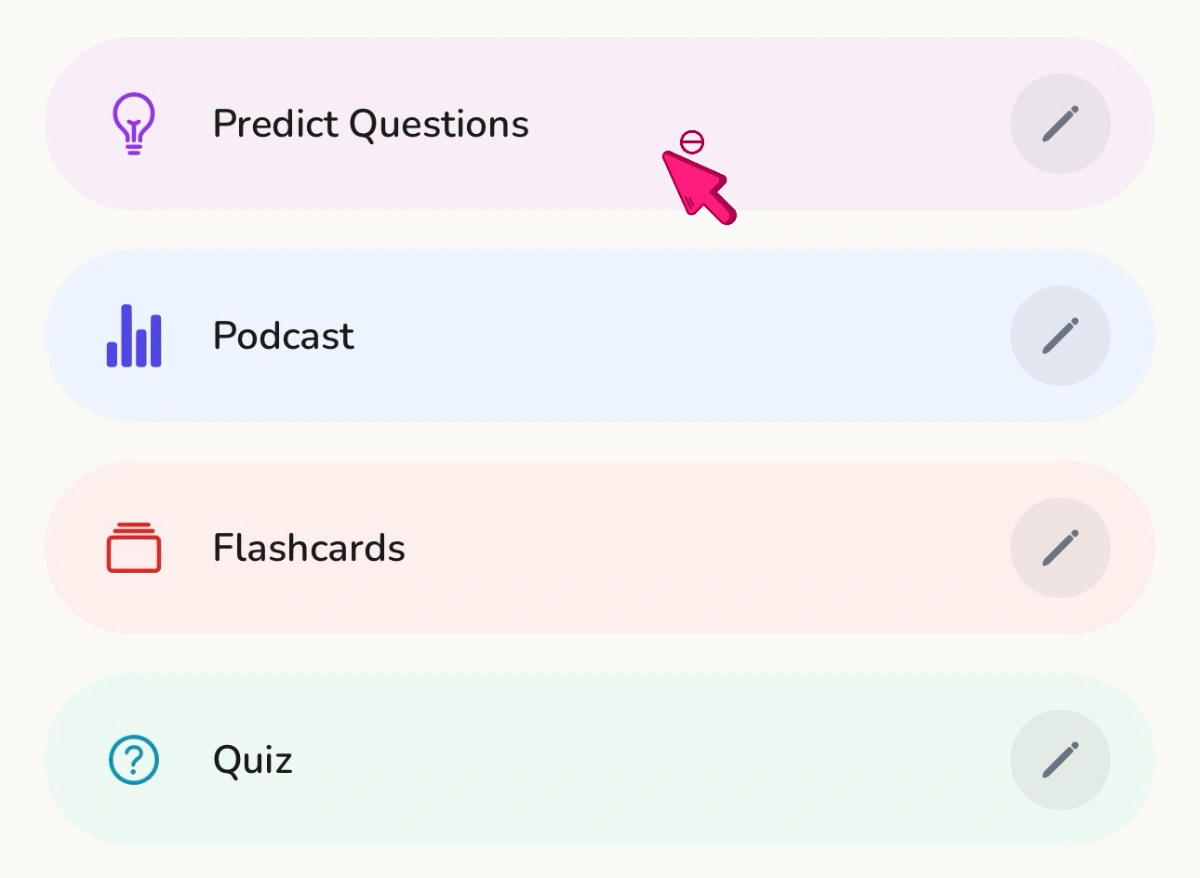
What Is Exam Prediction (And What It's NOT)
Let's be clear upfront: Brigo isn't a crystal ball. We can't magically see your exact exam paper.
What we CAN do is analyze patterns in your study materials using AI to identify:
Topics that appear repeatedly in past exams
Concepts your professor emphasizes in lectures
Question formats and difficulty levels specific to your course
Rising trends that suggest emerging focus areas
Think of it like this: if you were preparing for a basketball game, would you practice random shots, or would you study film of your opponent to see their patterns? Exam Prediction is your "game film" for finals.
How Brigo's Exam Prediction Actually Works
Brigo uses a two-pronged analysis system:
1. Trend Analysis (Your Past Papers)
When you upload past exam papers, Brigo identifies:
High Frequency Topics: Concepts that appear in 3+ consecutive years
Rising Trends: Topics gaining prominence in recent papers
Question Formats: Whether your exam favors MCQs, essays, case studies, or calculations
2. Concept Density Analysis (Your Notes & Textbooks)
By scanning your lecture notes and textbooks, Brigo finds:
Core Foundational Concepts: The building blocks everything else depends on
Professor Emphasis: Topics your instructor spent extra time explaining
Knowledge Gaps: Areas covered in notes but missing from past papers (these often appear as "new" questions)
The AI combines both analyses to create a prioritized prediction list tailored specifically to your course.
The Step-by-Step Guide: Getting Maximum Accuracy
Step 1: Create a Dedicated Notebook
Don't mix subjects. Create one notebook per course (e.g., "Anatomy Finals Spring 2025").
Step 2: Upload Your Past Papers First
Why first? Because past papers establish the baseline pattern.
What to upload:
Minimum: Last 3 years of exam papers
Ideal: 5+ years if available
Include marking schemes if you have them
Pro tip: Even if you only have photos of past papers your seniors shared, upload them. Brigo can read handwritten exams.
Step 3: Add Your Study Materials
Now layer in your context:
Lecture slides (PDFs work best)
Textbook chapters (relevant sections only)
Your personal notes (yes, handwritten notes work!)
Professor handouts or study guides
The magic happens when you combine both. Past papers show how they ask. Your notes show what they emphasize.
Step 4: Generate Your Prediction
Open your notebook
Tap the Studio tab
Select "Exam Prediction"
Wait 30-60 seconds for AI analysis
Review your personalized prediction
Step 5: Study Strategically
Your prediction will be organized by priority:
🔴 High Priority (Study These First)
Questions with 70%+ probability
Based on multi-year patterns or heavy professor emphasis
Time allocation: 60% of your study time
🟡 Medium Priority (Study These Second)
Questions with 40-70% probability
Supporting concepts that frequently connect to high-priority topics
Time allocation: 30% of your study time
🟢 Lower Priority (Study If Time Permits)
Questions with <40% probability
Good for comprehensive coverage after mastering the essentials
Time allocation: 10% of your study time
Real Example: How Sarah Used Exam Prediction for Her Pharmacology Final
Sarah, a second-year pharmacy student, was drowning in drug classifications, mechanisms, and interactions. Her final covered 12 weeks of content.
What she uploaded to Brigo:
4 years of past Pharmacology finals
Her lecture notes from all 12 weeks
Two textbook chapters on cardiovascular drugs
What Brigo predicted (High Priority):
"Compare and contrast ACE inhibitors vs ARBs" (appeared in 4/4 past papers)
"Explain the mechanism of action of beta-blockers" (heavily emphasized in Week 7 lectures)
"Case study: Patient with hypertension and diabetes" (rising trend, appeared in 2023-2024)
The result? Sarah focused 70% of her study time on these three question types and their variations. When the exam came, 6 out of 8 questions directly related to her high-priority predictions.
She didn't study less. She studied smarter.
The "Secret Sauce": Why Past Papers Are Non-Negotiable
You can generate predictions with just textbooks, but here's why adding past papers multiplies accuracy:
Without Past Papers:
Brigo analyzes content density and identifies important concepts. Useful, but generic.
With Past Papers:
Brigo sees your examiner's DNA:
Question phrasing patterns: Do they ask "Discuss" or "Critically evaluate"?
Mark distribution: Are high-mark questions always on specific topics?
Format preferences: 60% MCQ, 40% essays? All problem-solving?
Examiner bias: Every instructor has pet topics they return to
Example: In nursing exams, "fluid and electrolyte balance" might be a textbook chapter, but if it appears in 5 consecutive past papers with variations, Brigo flags it as ultra-high priority and even predicts the likely angle (case study vs. mechanism explanation).
Understanding Your Prediction Results (And How to Use Them)
Each predicted question comes with three key elements:
1. The Question Itself
Written in the format and style of your actual exam.
Example: "A 65-year-old patient presents with chest pain and elevated troponin levels. Discuss the pathophysiology of myocardial infarction and outline immediate management. (20 marks)"
2. Priority Level & Probability
🔴 High Priority (78% probability based on 2022-2024 pattern recurrence)
3. Reasoning (Read This!)
"This question type appeared in 2022 (15 marks), 2023 (20 marks), and 2024 (18 marks). Your lecture notes from Week 9 spent 3 slides on MI pathophysiology, indicating instructor emphasis. Cardiovascular emergencies are a core competency in your curriculum."
Why reasoning matters: It helps you understand why Brigo made this prediction, so you can make informed decisions about your study priorities.
Advanced Tips: Getting 95%+ Accuracy
Tip 1: Update Your Notebook Throughout the Semester
Don't wait until two weeks before finals. Add lecture notes weekly. When you get a new past paper, upload it immediately. This gives Brigo more time to identify patterns.
Tip 2: Use Prediction Early, Then Again Late
First prediction (6 weeks out): Broad overview, plan your study schedule
Second prediction (2 weeks out): After adding all materials, refined focus
Final check (3 days out): Quick review of high-priority items
Tip 3: Cross-Reference With Professor Hints
Did your professor say "this will definitely be on the exam"? Check if Brigo also flagged it. If yes, that's your ultra-priority. If no, manually add focus to that topic.
Tip 4: Look for "Model Answer" Patterns
For essay predictions, Brigo often provides marking scheme breakdowns:
Example marking scheme:
Define myocardial infarction (2 marks)
Explain pathophysiology including plaque rupture and thrombosis (8 marks)
Outline immediate management: MONA protocol (6 marks)
Discuss complications (4 marks)
Use this to structure your practice answers and ensure you're hitting all mark-worthy points.
Tip 5: Don't Ignore Medium Priority
Students often make this mistake: they master high-priority topics but completely skip medium. Bad idea. Medium-priority questions are your "safety net." They're likely enough that you should at least understand them conceptually.
Common Mistakes Students Make (And How to Avoid Them)
❌ Mistake 1: Uploading Only One Year of Past Papers
Why it fails: One year might be an anomaly. Patterns emerge over multiple years.
The fix: Upload 3-5 years minimum. If you can't find them, ask seniors or check your department's archive.
❌ Mistake 2: Uploading Random Textbook Pages
Why it fails: Generic textbook content doesn't reflect your specific course emphasis.
The fix: Upload the chapters or sections your professor actually covered in class.
❌ Mistake 3: Ignoring the Reasoning
Why it fails: You don't understand WHY something is predicted, so you can't make informed study decisions.
The fix: Always read the reasoning. It's your "behind the scenes" look at the analysis.
❌ Mistake 4: Treating Predictions as "The Only Things to Study"
Why it fails: Exam Prediction is a guide, not a guarantee. If you only study predicted questions and nothing else, you're taking unnecessary risk.
The fix: Use the 60-30-10 rule (see Step 5 above). Master high priority, understand medium, be aware of low.
❌ Mistake 5: Uploading Everything at Once the Night Before
Why it fails: Rushed uploads mean you might miss important materials or not organize them properly.
The fix: Build your notebook progressively throughout the semester.
FAQ: Your Questions Answered
Q: Can I use Exam Prediction if I only have my textbook?
A: Yes, but accuracy will be lower (around 40-50%). Brigo will identify conceptually important topics, but without past papers, it can't detect examiner-specific patterns.
Q: What if my school doesn't release past papers?
A: Try these sources:
Ask seniors for their copies
Check student forums or group chats
Look for departmental archives
Some professors post sample questions—use those
Q: How far in advance should I generate my first prediction?
A: Ideally 4-6 weeks before your exam. This gives you time to create a study plan and adjust as you learn.
Q: Will Brigo work for multiple-choice exams?
A: Absolutely. Upload past MCQ papers and Brigo will identify topic patterns and even predict the likely distractor types.
Q: My professor said they're changing the exam format this year. Will Brigo still work?
A: Partially. Brigo can still identify topic patterns and concept importance, but if the question format changes dramatically (e.g., all essays to all MCQ), the format predictions will be less accurate. Focus on the topic predictions instead.
The Bottom Line: Study Smarter, Not Just Harder
Brigo's Exam Prediction isn't about gaming the system. It's about respecting your time and energy.
You have limited hours before your exam. You can spend them anxiously reviewing everything equally, or you can strategically focus on what actually matters.
The choice is yours.
Ready to stop guessing and start studying with confidence?
Open Brigo
Create your exam notebook
Upload your materials
Generate your prediction
Study strategically
Your future self (the one celebrating after finals) will thank you.
Have questions about Exam Prediction? Drop a comment below or email us at support@brigo.app. We're here to help you succeed.
New to Brigo? Download the app and try Exam Prediction free for your next exam.